Showing posts with label Griswold. Show all posts

Tuesday, February 1, 2011

Griswold Cast Iron Skillets Part II

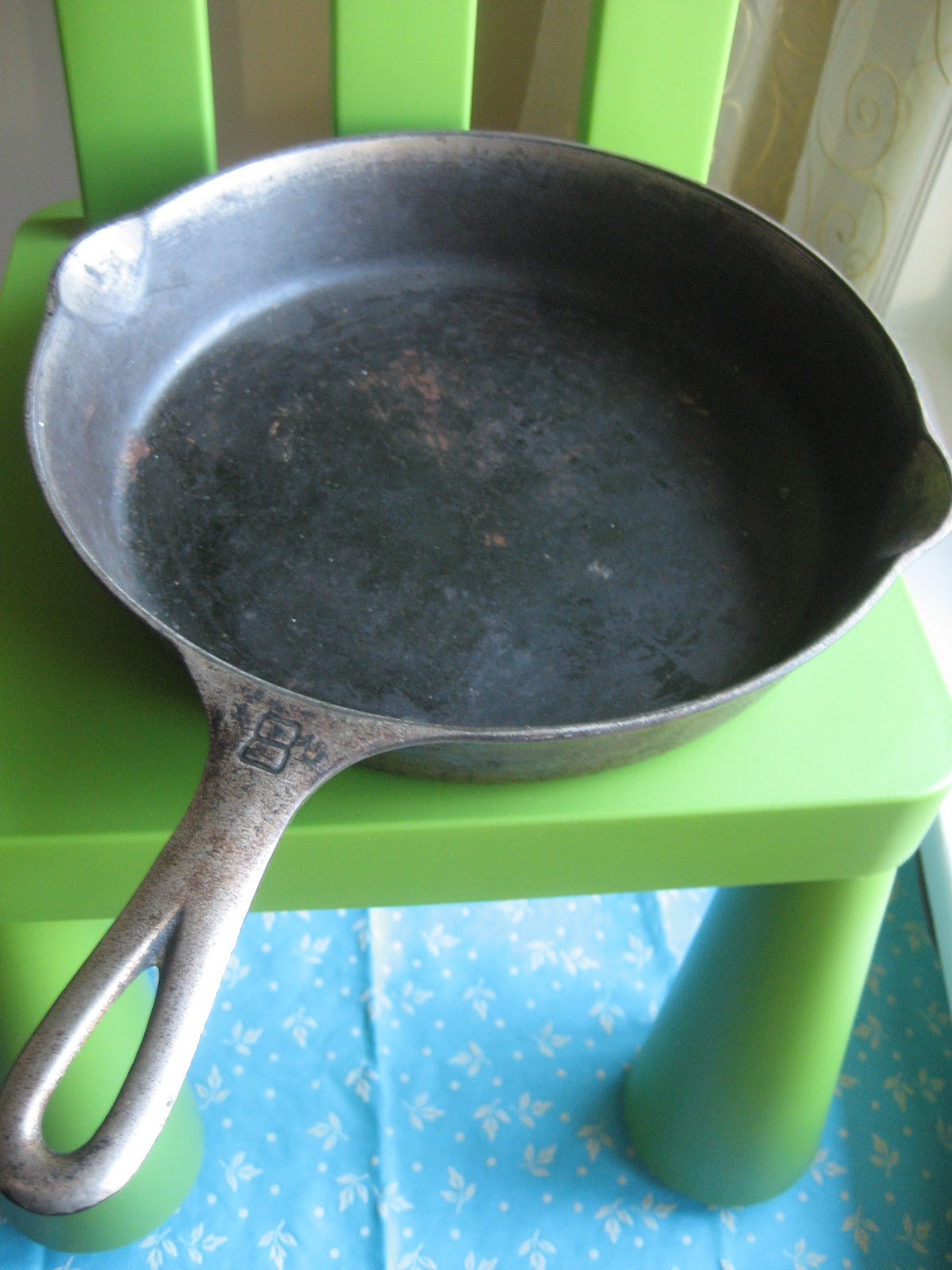
Thanks everyone for your comments on my rare Griswold #2 Skillet! As I mentioned, I was lucky enough to find a larger #8 Griswold pan on a nearby shelf on the same day.


I usually find large cast iron pans too heavy to handle but this one seemed surprisingly light when I picked it up. Vintage cast iron has thinner walls and smoother finishes than those produced by major manufacturers today. I suspect this has to do with labour costs, as the old Griswold and Wagner factory workers completed the extra step of grinding the pan interiors to a smooth finish after casting. Some sources also refer to higher quality metals being mined during that era.


There are pros and cons for both vintage and modern pans. The newer Lodge cast iron pieces have a rougher finish, but their thicker walls allow the pan to heat up slowly and retain even cooking temperatures. Griswold pans are better for searing, as their thinner walls heat up more quickly. The smooth surfaces are better suited to seasoning, and subseqently provide better non-stick performance.


I love this elegantly simple detail at the underside of the handle as it meets the pan. Apparently this is an identifying mark for collectors to differentiate authentic pieces from fakes.

I was certainly surprised to learn the high value of the collectable small skillet shown below. This larger pan, on the other hand, is in a much more common size and is therefore valued at about $40. I think I may have to dabble in the art of Thrift ReSelling for the little guy, and keep this one for myself.


My plan is to clean the pans thoroughly and season them well so I can examine their true condition. The beauty of old cast iron is their ability to be stripped, cleaned, and restored. I can't wait to see the results of this process! If all goes well, I will post a tutorial on the subject. =)


If you are planning to keep your eyes peeled for valuable vintage cast iron pieces, here are the Top Five pointers I picked up:

1. Griswold is more sought after than Wagner

2. Wagner pans are similar quality to Griswold (I suppose ReSell the Griswolds, keep the Wagners?)

3. Heat Rings on the underside of a Griswold pan date the piece to the 1920s or before

4. Griswold pans without an ERIE marking were made in a separate factory and are of much lower value

5. Some later pans were marked with both Griswold and Wagner names when the companies merged. These are of limited value.

Happy Hunting!

Sunday, January 30, 2011

Griswold Cast Iron Skillet #2 Rare Antique

I noticed two really nice cast iron pans at Value Village some time back. As you regular readers know, I'm usually on the lookout for the enamelled stuff, so I generally don't know much about bare cast iron pieces. I had, however, heard of Griswold and Wagner's history and knew that the companies were quite old and well known.


The smaller skillet was $6 and seemed to be a great size for frying up one or two eggs in the morning. The back of the pan reads:

Cast Iron Skillet
2
Griswold
Erie, PA., U.S.A.
703

When I returned home and started doing some research on the pieces, I was surprised to find that I had purchased a rare, hard to find, and collectable Griswold skillet. The font and markings on the logo identify this piece as one created in either the 1920s or 1930s. My pan would be referred to by a collector as a "Griswold No. 2 Skillet, Pan Number 703, Smooth Bottom, Block Logo, EPU." The last item refers to the factory located in Erie, Pennsylvania, USA.


On ebay, I found several examples of this exact pan which sold for between $200-$400. The smooth bottom refers to the lack of a heat ring, a raised circle found on Griswold pans manufactured before the 1920's.  The same size pan of the older vintage with a heat ring fetches around $1,000 more.


I have learned that it is important for these antique pans to be flat and unwarped by the burdens of cooking over high heat. One of the tests used to confirm flatness involves sliding a $1 US bill around the perimeter of the pan's underside. I'm happy to report that this pan has good bones and is nice and flat on the bottom.


I can't believe that my $6 skillet is worth about 50 times what I paid for it! I am a bit confused as to why the #2 Griswold Skillet 703 is so important to collectors. I am speculating that perhaps fewer of the small pans were produced - maybe they were seen as being less practical than the larger pieces?

UPDATE: See the other skillet I purchased at Griswold Cast Iron Skillets Part II and read more about finding vintage pans yourself. I'll also let you know what my plan is with these antique pieces!

Linking to Apron Thrift Girl's Thrift Share Monday
Related Posts Plugin for WordPress, Blogger...